
JLM Morton – Head Judge Q&A (Poetry 2026)
We’re thrilled that JLM Morton is the head judge for the New Writers Poetry Competition 2026 and she’s answered some questions about her work, poetry, nature and what type of poetry impresses her. So if you are considering entering our latest poetry competition, or you’d simply like to find out more about the brilliant JLM Morton, read on.
About our Head Judge – JLM Morton
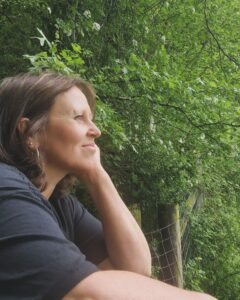
JLM Morton is a writer, celebrant and creative producer from Gloucestershire in the west of England. Her poetry has featured on BBC6 Music and appeared in Poetry Review, Poetry London, Rialto, Magma, Mslexia, The London Magazine, Poetry Birmingham, The Sunday Telegraph and elsewhere.
Her prose writing has won the Laurie Lee Prize, been longlisted for the Nan Shepherd prize and extracts from her nonfiction Tenderfoot have been published in Caught by the River, Oxford Review of Books and Elsewhere: A Journal of Place. Juliette is the winner of the Geoffrey Dearmer Prize and the Poetry Archive Worldview Prize and she is twice a Pushcart Prize nominee.
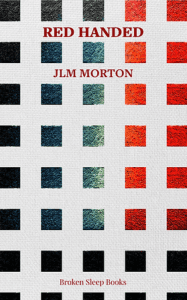
Her debut poetry collection Red Handed, was highly commended by the Forward Prizes and a Poetry Society Book of the Year (Broken Sleep Books, 2024). She teaches for Poetry School, Poetry Society, Women Poets Network and is the founding Director of Dialect Writers Collective. Her second poetry collection, Borrowed Ground, is forthcoming in August 2026 and her debut nonfiction in 2027. Find her online: jlmmorton.com
Head Judge Q&A – JLM Morton
Is there a poem or poet who first interested or inspired you as a child, and at what point did you realise you wanted to share your own writing with others?
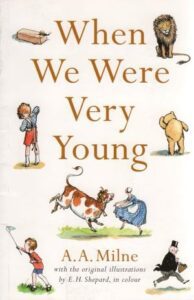
My earliest memories of poetry would have been nursery rhymes – musicality and words have always been inextricable for me – and then books like AA Milne’s When We Were Very Young or Now We Are Six. So I remember poetry being in my life from a very young age – my mum is an avid reader, not of poetry per se, but she did work as a secretary in a children’s publisher for a while so we were surrounded by books at home and often went to the library.
I do remember very clearly falling in love with John Donne’s work – specifically ‘The Flea’ – when I was fourteen or fifteen and being blown away to learn that a poem was capable of expressing desire with such wit, originality and complexity. I didn’t give myself permission to think I could possibly be a poet until about eight years ago, but I have always read a lot of poetry, studied it at university, made the annual pilgrimage to Southbank for the TS Eliot Prize and when my grandparents had passed away and I looked through their visitors book I saw that I had written an (illustrated!) poem in it every single time I went to see them as a kid.
Your debut poetry collection, Red Handed (Broken Sleep Books, 2024), is a beautiful and powerful exploration of England’s rural textile heritage, its colonial legacy, and how it interweaves with nature. What inspired you to explore these subjects through poetry, and what surprised you most during the research process?
I have long had a research interest in colonial / postcolonial studies and did my doctorate on Whiteness and Women’s Writing in the Anglophone Caribbean 1795-1986 (I know, very catchy). In particular I am interested in the ways global dynamics of power, oppression and control show up in rural contexts so when I got the opportunity to do a residency with Stroudwater Textile Trust, cloth became a lens through which I explored these themes. Stroud famously produced the woolen scarlet broadcloth that clothed the redcoat soldiers who patrolled and enforced the boundaries of British colonial rule and empire.
The dyestuff used to get that very bright red colour comes from cochineal beetles, a valuable commodity which was farmed in central America and the Caribbean and shipped to the UK as part of the triangular Transatlantic slave trade. ‘Stroud Scarlet,’ as it came to be known, thus became the jumping off point for the collection. The biggest surprise to me was that I happened to be researching my family tree at the time of writing the collection and I discovered that on my maternal side my five times great grandfather was born in the States and became a red-coated loyalist soldier.
On my paternal side I discovered that my grandad was the first person in many generations not to work in the textile industry and that I could trace a continuous line of textile workers back to 1540s Yorkshire, via the knitting factories of Nottingham. This brought in a thread around the complexities of white working class roles and relationships (as workers, emigrants, convicts) with these power dynamics of domination and control – a topic I still don’t think I’ve finished thinking and writing about.
One of the poems in that collection, ‘Lifecycle of the Cochineal Beetle, c.1788’, was first published in The Poetry Review (2022) and went on to win The Geoffrey Dearmer Prize. Looking back, what impact did that recognition have on your development as a poet?
I think it gave me what I think of as ballast, a strong foundation on which to grow as a poet. Writing can be such a solitary endeavour and so we all doubt ourselves as poets all the time, don’t we?! It was an honour to get that kind of recognition early on and it definitely gave me a bit of confidence that I might be on the right track.
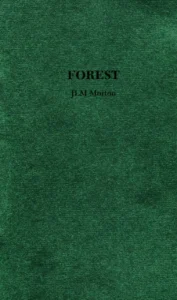
Your long poem FOREST (Yew Tree Press, 2025) tells the legend of the black pine that was the first tree to arrive at Sladebank Woods near Stroud. Was there a particular moment when the tree first captured your imagination, and how did working in Sladebank Woods help shape the voice of the poem?
Yes there was a very specific moment when that particular tree captured my imagination when I was looking over some old maps and came across a map from 1880 on which the black pine was marked – in the middle of some grazing fields, so it must have been a significant tree even then to earn its own place on the map. It would have been a prestigious, status-symbol of a tree at that time, collected by a Victorian plant hunter or ordered from a high end nursery (a story in itself!).
My practice is often based on archival and somatic research, so exploring the origin and legacy of this non-native tree helped me to develop the creation myth that became FOREST. Practicing deep listening in Sladebank was important in the process – spending time sitting under the tree at the top of the woods which has become a ceremonial and gathering place for the local community also influenced the development of the work.
In an interview with the Elsewhere journal in September 2025, you spoke of the trees that “look like gods” in the area around Kenema in Sierra Leone. Moments of awe and wonder seem to appear or are implied in much of your work, particularly in FOREST. Do you think poetry can help us cultivate a sense of reverence for the natural world?
Yes I do – I don’t agree with Auden who said that poetry makes nothing happen but at the same time I don’t expect poetry to play an instrumental role in some kind of equation whereby poetry + ‘nature’ theme = reverence for natural world. I do think that one of the effects of reading, writing and listening to poetry is to cultivate acute attention to the world and an understanding of our environment which recognises the polyphonous, multiple, complex and awe-some nature of the more than human.
Alongside your writing, editing, teaching, and creative production, you are also a celebrant. How has being so closely involved in moments of transition in people’s lives influenced your approach to writing poetry?
I’m always looking to create ceremonies that are meaningful for that particular moment in people’s lives (or end-of-life) and so I’m always on the look out for new poems that might reflect those transitions or capture something of a relationship or person’s character – but I don’t think that’s influenced my own work per se. I do think poetry has shamanic qualities and in my forthcoming collection, I do use some ceremonial language in the long FOREST sequence which helped me think about repetition, resilience, and the role of liturgy in community.
With so many projects on the go, can you give us any top tips for sustaining creative motivation and carving out the time to write?
Ever since I got a DYCP grant from Arts Council a few years ago I carved out at least one ‘sacred writing day’ each week (Mondays) – doing this over the course of a few months eventually solidified into a permanent practice. It doesn’t need to be a day – it could be two hours per week, one hour; when I get stuck I’ll put a timer on for 20 minutes and write.
There’s no way around putting the time in – if you would like to produce a pamphlet or a collection then you need to make the work! As they say, you can’t edit a blank page. This is why we run three online weekly writing hours at Dialect where we support writers to develop their work – the camaraderie and alchemy of those hours has produced many a draft novel, book proposal and poetry collection! I find a lot of inspiration in art galleries and museums as well as immersing myself in my local environment. It might sound a bit naff, but honestly – try to write like no one’s watching, trust your own imagination and love the process.
Can you tell us anything about your next poetry collection, Borrowed Ground, due to be published in August 2026 (Broken Sleep Books)?
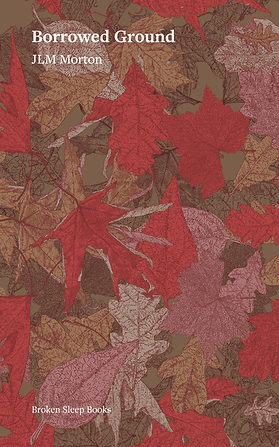
Sure – here’s the blurb…
Borrowed Ground is a reckoning with land, climate grief, and the entanglement of human and more-than-human life. Rooted in the woodland and river country of the west of England, the poems move between close observation and myth: a central creation sequence follows a black pine through litany and shaped, fragmenting cinquains, while a closing sequence stages the drowning and mythic rebirth of Sabrina, goddess of the Severn. Morton works through erasure, found material, and liturgical forms without losing lyric precision, holding ecological dread against humour, domestic comfort, and ancient, feminist modes of knowing.
You also have a work on non-fiction due to be published in 2027 (Profile Books). Can you share anything about that, and how does writing non-fiction differ from writing poetry?
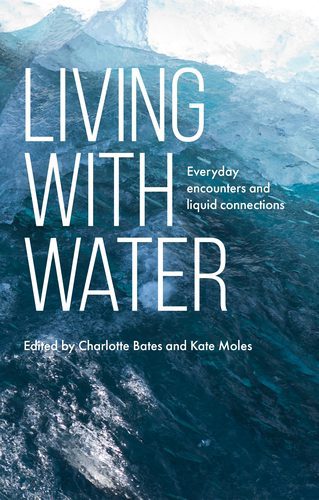
Creative nonfiction is a form that allows me to unpack a subject and explore it in a much more comprehensive way. The genesis of Tenderfoot (my nonfiction book) was actually a sonnet sequence commissioned for Living With Water, an ethnography collection published by MUP. I walked, swam and trespassed my way along a river and once I’d written the poems, I knew I wanted to explore the experience with the more expansive medium of prose. Those sonnets then became a lyrical essay which won the Laurie Lee Prize but I knew there was still more I wanted to find out about this narrative and that led me to developing the book.
Tenderfoot is a lyrical nonfiction narrative about blue space, rivers, kinship and care in the present and deep time of a landscape. Braiding together personal essay and a history of the Churn in Gloucestershire the narrative takes us along the river’s course. Drawn home by the death of my father and my own worsening health, I seek solace in an attachment to place and by uncovering forgotten Dobunni (Celtic, Iron Age) women’s rites and rituals of care along the river, offer a powerful meditation on land, legacy and belonging.
Tenderfoot is both elegy and a call-to-action: a reminder that tending to one another, like tending to water, is urgent and intimate work. Interrogating questions around the right to roam, access to land and stewardship of the places we call home; kinship care for each other and the essential preservation of our wellbeing and fortitude in a time of environmental emergency and major geopolitical shifts; Tenderfoot asks how do we journey through these challenging times, what can we learn from ancient matriarchal cultures and contemporary scientific insight, where do these rivers lead?
As a reader (and judge), what immediately catches your attention or piques your interest when reading a new poem for the first time?
Unexpected language and unmistakable music in the lines – it should read or sound like a score that’s been playing in a room I’ve just wandered into. Trust me to catch up with you.
Are there any common mistakes you see emerging poets make, and are there any particular poetic styles or themes that you find especially enjoyable or interesting?
The most common mistake is probably the overly long ‘set up’ – poets feeling that they have to spend a stanza or two introducing the poem rather than just getting straight into it. I enjoy all themes and styles – please don’t feel you have to send in so-called (dreaded) ‘nature poetry’! I want to read poems that show me something I don’t already know, that inhabit a place of deep listening and attentiveness to the world – whatever world – the speaker finds themselves in. It should feel like you’re risking something by committing those words to the page.
Thank you to JLM Morton for answering our questions and for agreeing to be the head judge for the New Writers Poetry Competition 2026. If you haven’t already, be sure to check out her fantastic, thought-provoking and enlivening work.